

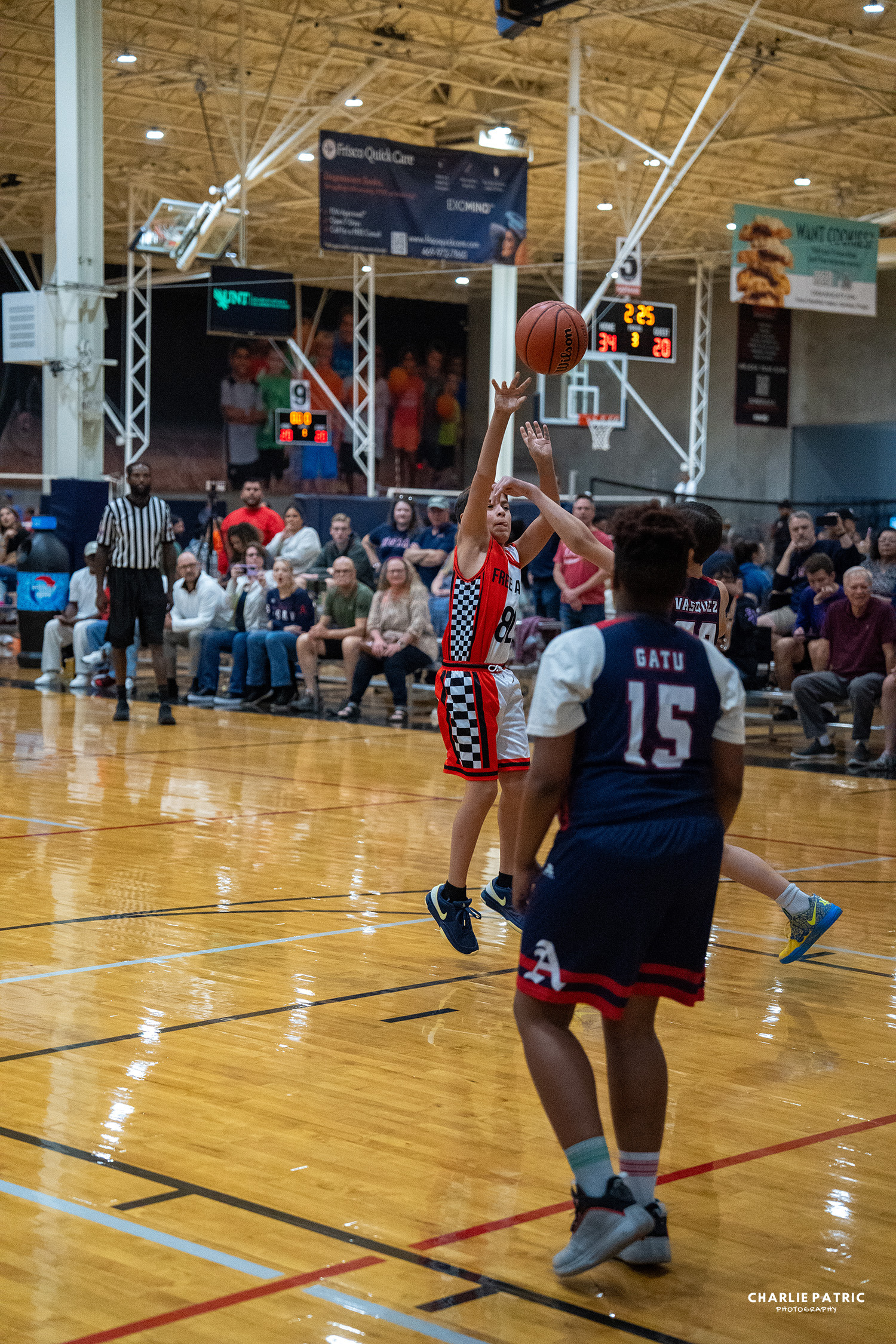
When it comes to sports photography, there’s a common misconception that the best camera settings for sports events are always the default ones. This couldn’t be further from the truth. While default settings provide a good starting point, they do not necessarily yield the best results in every situation. As a seasoned sports photographer based in Frisco, Texas, I have learned through years of experience that tweaking the camera settings can significantly enhance the quality and impact of sports photographs. You can learn more about this on our sports photography page.
Myth: Default Settings are Always the Best
Many amateur photographers and even some professionals harbor the belief that they should stick with the default settings of their cameras when photographing sports events. The reasoning behind this belief is that the camera’s default settings are often factory-optimized for the most typical and common shooting conditions.
Reality: Tailoring Your Settings is Key
However, in practice, sports photography is often far from typical or common; it’s dynamic, fast-paced, and unpredictably exciting. In such situations, adjusting your camera settings in accordance with the specific requirements of the event can make all the difference between a good shot and an excellent one. This is where understanding the best camera settings for sports events becomes crucial.
Shutter Speed
Shutter speed, for instance, plays a critical role in sports photography. A too-slow shutter speed might leave you with blurred player movements, while a too-fast one could result in dark images. Experimenting with the shutter speed by adjusting it in increments allows proficiency in capturing the best action-packed shots in any light condition.
Aperture and ISO
Similarly, adjusting the aperture and ISO settings in real-time can significantly improve the overall quality of the photographs. While a wide aperture and high ISO settings can be advantageous in low light conditions, such as indoor games or dusk matches, they may produce overexposed or grainy images in broad daylight. Understanding these parameters and learning how to flexibly manipulate them can truly unleash the potential of your sports photography.
Focusing Mode
Another crucial adjustment is the focusing mode of your camera—the default settings may not always provide the best focus for moving subjects. Most cameras have a continuous focusing mode (often denoted as AI Servo in Canon and AF-C in Nikon cameras) that works great for tracking movement, making it a potentially far better option for sports photography than the standard single-shot focusing mode.
Common Mistakes in Sports Photography Settings
Before you dive into experimenting with your camera settings, it’s essential to understand the common mistakes people often make in sports photography. One of the most prevalent ones is neglecting to adjust the settings according to the changing lighting conditions, resulting in underexposed or overexposed images. Another frequent mistake is using an inappropriate focusing mode, leading to blurry images.
Furthermore, many photographers tend to trust auto modes too much. Though auto modes are helpful in some situations, they can be limiting in others, especially in sports photography where lighting and action change frequently.
Lastly, they often forget about the composition and framing, focusing too much on getting the action that they miss the broader picture. Remember, an essential part of sports photography is capturing the atmosphere and the emotion of the game, which can only be achieved by paying attention to the composition.
First Time Shooting a Sports Event: What to Expect
If you are shooting a sports event for the first time, there are a few things you should be aware of. Firstly, you will need to adapt to the quick pace of the game. Sports events are fast-moving, and you need to be ready to adjust your camera settings, position, and focus on-the-fly. Having the technical knowledge is only the first step; the rest is about coordinating your eyes with your hands and letting the raw excitement of the match guide you.
Secondly, expect to face varied and changing lighting conditions. It could be a daytime game with an abundance of light, or an evening match under artificial lights, and your challenge will be capturing clear, sharp, and well-exposed images under all situations. This need for versatility is where some knowledge of the best camera settings for sports events comes into play.
A Real-World Perspective
From my years of experience as a professional photographer covering sports events in Frisco, Texas, I can assure you that the best camera settings largely depend on the nuances of each event—a daytime soccer game will require different settings compared to an indoor ice hockey match.
At Charlie Patric Photography, we pride ourselves on capturing the raw emotion and intensity of sports. If you observe closely, you’ll see that each of our photographs tells the story of the game—the tension, the playfulness, the determination. This storytelling aspect of sports photography is something achieved through experience, intuition, and of course, a thorough understanding of the camera’s functionality.
The Uncommon Insight
The most crucial thing in sports photography, unsurprisingly, is the energy it demands. Regardless of how familiar you are with changing settings or how advanced your camera is, the liveliness that sports demand is unparalleled. The common notion that a more expensive camera would invariably yield better pictures isn’t necessarily the truth. Sports photography is not just about ‘capturing’ moments; it’s about ‘feeling’ them, a feeling best captured when you become one with the energy of the game and let your lens follow your emotions.
Think outside the box, and let your passion guide your shots – and who knows, you might just capture some electrifying moments that perfectly encapsulate the spirit of the game. Remember, it’s always more about the photographer than the camera! For more tips and insights, check out our sports photography page.
For further reading, you can check this comprehensive guide on photographing sports indoors and out.