

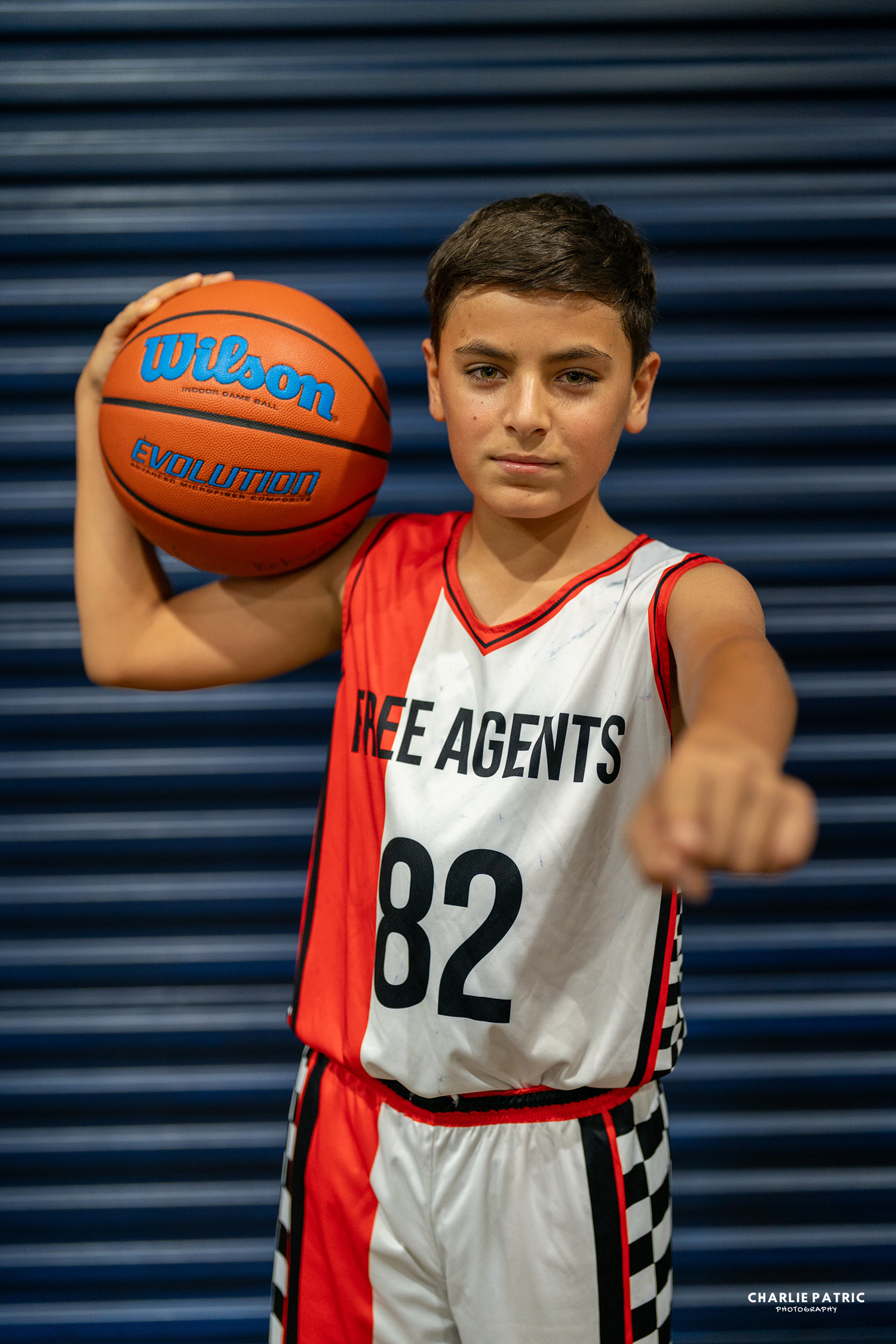
Imagine this: you’re at a Little League game at the Frisco Sports Complex. Your son is up to bat. He swings and hits it out of the park – a genuine moment of glory for him and the whole team. You’re there with your camera, ready to capture this defining moment. But when you look at your photo later, all you see are blurry figures. In the backdrop, the signboard of a hotdog stand is surprisingly crisp.
This scenario could have easily been avoided with the use of the best lenses for sports photography. More often than not, people think the camera does all the heavy lifting. However, in reality, the lens plays an equally crucial, if not a more substantial, role in determining the quality and depth of your photos.
Understanding the Role of Lenses in Sports Photography
As a professional sports photographer based in Frisco, Texas, I’ve had various experiences with lenses. The selection of the right lens depends on the type of sport you’re shooting, the distance from which you’re shooting, and the amount of light available. You’ll want a lens that can perform well under a variety of conditions: a fast autofocus to capture quick movements, a longer focal length for shooting from a distance, and a large aperture for shooting in lower light conditions. Learn more about this on my sports photography page.
A common misconception I’ve encountered during my time as a sports photographer in Frisco is that the higher the zoom level of the lens, the better. Sure, having a higher zoom level can help capture details from far off, but it can also make your images appear flat, lacking in depth and dimension due to the compression effect of telephoto lenses.
Choosing the Best Lenses for Sports Photography
70-200mm f/2.8 Lens: The All-Rounder
This lens is perhaps the most commonly found in the kit of any sports photographer. Its versatility comes from the ability to capture a variety of shots, from wide-angle scenes to tight, up-close shots of the action. The aperture of f/2.8 ensures excellent performance in low light conditions.
300mm f/2.8 Lens: The Specialist
If the sport you’re covering involves more distant subjects like football or baseball, a 300mm f/2.8 lens can prove to be a game-changer. It’s a top choice for professional sports photographers thanks to its ability to isolate subjects and draw them out from the background, creating a beautiful depth of field and a sense of intimacy in a sea of chaos.
16-35mm f/2.8 Lens: The Storyteller
Sometimes, as a sports photographer, you need to capture the emotions, the commotion, the energy of the spectators, the joy of victory, or the despair of defeat. A wide-angle lens like the 16-35mm f/2.8 can help you capture these raw, unscripted stories with a feeling of immersion and depth.
Factors to Consider When Choosing the Best Lenses for Sports Photography
When selecting a lens for sports photography, you should consider the following factors:
- Fast Autofocus: Your subject is likely to be moving fast and in unpredictable ways. Thus, lenses with a faster autofocus can help capture moments with precision.
- Focal Length: Depending on the type of sport and your access to the field, you would need to determine the right focal length that offers clear, close shots while maintaining depth.
- Aperture: In sports, many crucial moments take place under less-than-ideal lighting conditions. A wide aperture can allow more light to reach the sensor, enabling clearer shots even in low light.
So, let’s circle back to that moment at the Little League game. With a 70-200mm f/2.8 lens, one of the best lenses for sports photography, you could have perfectly captured your son’s triumphant swing, the scurrying figures on the field, the reactions of the crowd, all with precision and clarity.
Remember, a worthwhile investment in the appropriate lens can drastically enhance your sports photography. With practice and the right gear, you can capture those fleeting yet impactful instants, preserving memories and emotions in a frame.
At Charlie Patric Photography, my aim is not just to take photos but to immortalize moments, freeze emotions, and tell captivating stories. Every snap I take is a salute to the spirit of the sport and the athletes. I’ve had the privilege of capturing the best of sports action, and I hope with these tips, you will too. Check out my sports photography page for more tips and tricks.
For more information on the best lenses for sports photography, you can visit this comprehensive guide.